
Why “Starting in January” Hurts Your Progress in English
Many learners pause their English studies because of holidays, vacations, or busy schedules — and then start over again. This article explains why repeated restarts slow progress, how the brain reacts to stopping, and what to do to preserve language skills even during breaks.
ENGLISH
12/28/20254 min read


Every year in the U.S., the same pattern appears right after Thanksgiving.
Attendance drops.
Students look at the calendar and think:
“There are only two or three weeks left.”
“It’s easier to restart in January.”
They don’t quit English.
They put it on pause.
And that pause costs far more than it seems.
What Actually Gets Lost in Those 2–3 Weeks
Between Thanksgiving and winter break, a dangerous illusion appears:
“Nothing will really change in such a short time.”
But from a learning and brain-based perspective, this is the most vulnerable period.
When students disengage during this window, they don’t just lose time. They lose:
established rhythm
automatic speech patterns
confidence in their current level
Skills that were starting to feel easier stop being used.
Patterns that were becoming stable stop activating.
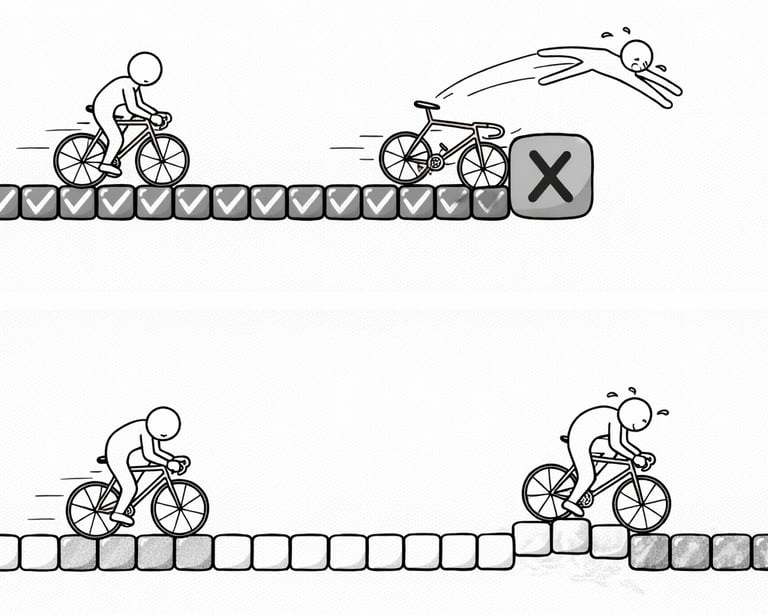
In January, many students don’t return to where they left off.
They return below that level.
Instead of moving forward, they spend weeks rebuilding what already existed.
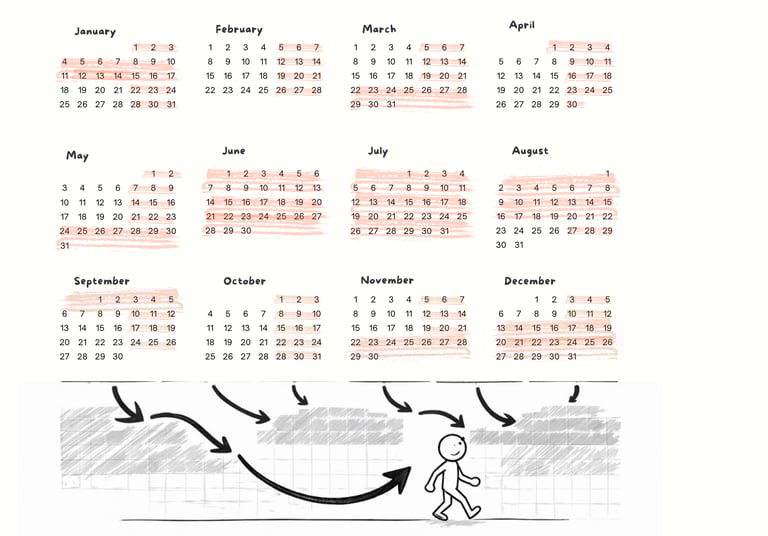
When you look at the academic year as a whole, it becomes clear why so many learners stay stuck at the same level for years.
Holidays, breaks, summer, travel — pauses are inevitable.
The problem is that each time, learners stop completely and wait for a “fresh start.”
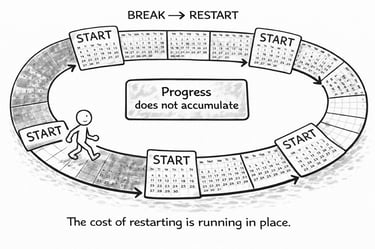
Over one year, this doesn’t mean one break. It means multiple restarts.
Each restart eats away at previously built automaticity.
The Predictable Result
When this happens year after year, the outcome is always the same:
the same level
the same difficulties
the feeling of “I’ve been learning English for years, but nothing changes”
Not because the person can’t learn, but because several times a year, momentum is reset to zero.
Why “I’ll Start in January” Works Against the Brain
Andrew Huberman talks about this often in the context of goals and habits.
The core idea is simple:
The nervous system does not understand artificial dates.
Your brain doesn’t know it’s January 1.
It only tracks one thing:
whether a behavior is still active
or whether it has stopped
When someone mentally “switches off” and waits for a new start, the brain receives a clear signal:
“This skill is optional.”
Optional skills degrade the fastest.
Of course, skills don’t disappear over a weekend, or even over a couple of weeks.
But without use, they lose sharpness.
Language works the same way as physical fitness:
if you don’t stop completely, getting back on track is much easier.
That’s why the goal is not restarting but keeping the connection to the language alive, even if you only have five minutes a day.
Tips for Students
(Practical and realistic)
1. Maintain the skill with short actions
Not full lessons. Not studying rules.
Enough is:
60 seconds of spoken English using a familiar structure
one answer to a known question
repetition of one rule or topic
reading one short English post and reacting to it
Even once a day is enough to keep the skill “warm.”
2. Repeat what is already familiar
This is not the time for new grammar or complex vocabulary.
Instead:
repeat the same phrases or structures
use familiar language
return to known formats
Don’t worry about boredom.
If repetition feels boring, it usually means the skill is already becoming automatic.
If it doesn’t feel easy or automatic yet, repetition protects what you’ve already built.
3. Reduce the volume, not the habit
Instead of “study for 30 minutes”:
record one short voice message in English
write one short paragraph
redo one familiar exercise
The goal right now is not growth but maintaining the skill.
Strategies for Teachers
1. Don’t introduce new content
This is the most common December mistake.
New content during this period:
overloads students
lowers attendance
reduces retention
The best message you can send is:
“We’re reinforcing what you already know so you’re ready for new content in January.”
This alone increases engagement.
2. Practice, don’t expand
Use this time to:
repeat core concepts
drill grammatical structures
apply the same skills and vocabulary in slightly different contexts
This strengthens procedural memory (the type that survives breaks).
December is about stabilization and consolidation, not acceleration.
3. Name the trap out loud
Tell students directly:
“If you stop now and restart in January, you’ll spend weeks getting back to where you already were.”
No pressure. No fear.
Just a fact.
When learners understand the cost of pausing, they are more likely to continue.
In Conclusion
Progress is not lost because of holidays.
It’s lost when a pause is interpreted as failure.
If you want your English level to grow year after year, stop starting from zero every January.
Maintain what you’ve built.
Reinforce it.
That’s how learners finally move to the next level.

Free Mini Video Course
I'll send you 5 short videos with secrets about how to trick your brain into remembering and using what you learn
contact
eu@englishuniversity.pro
© 2025. All rights reserved.